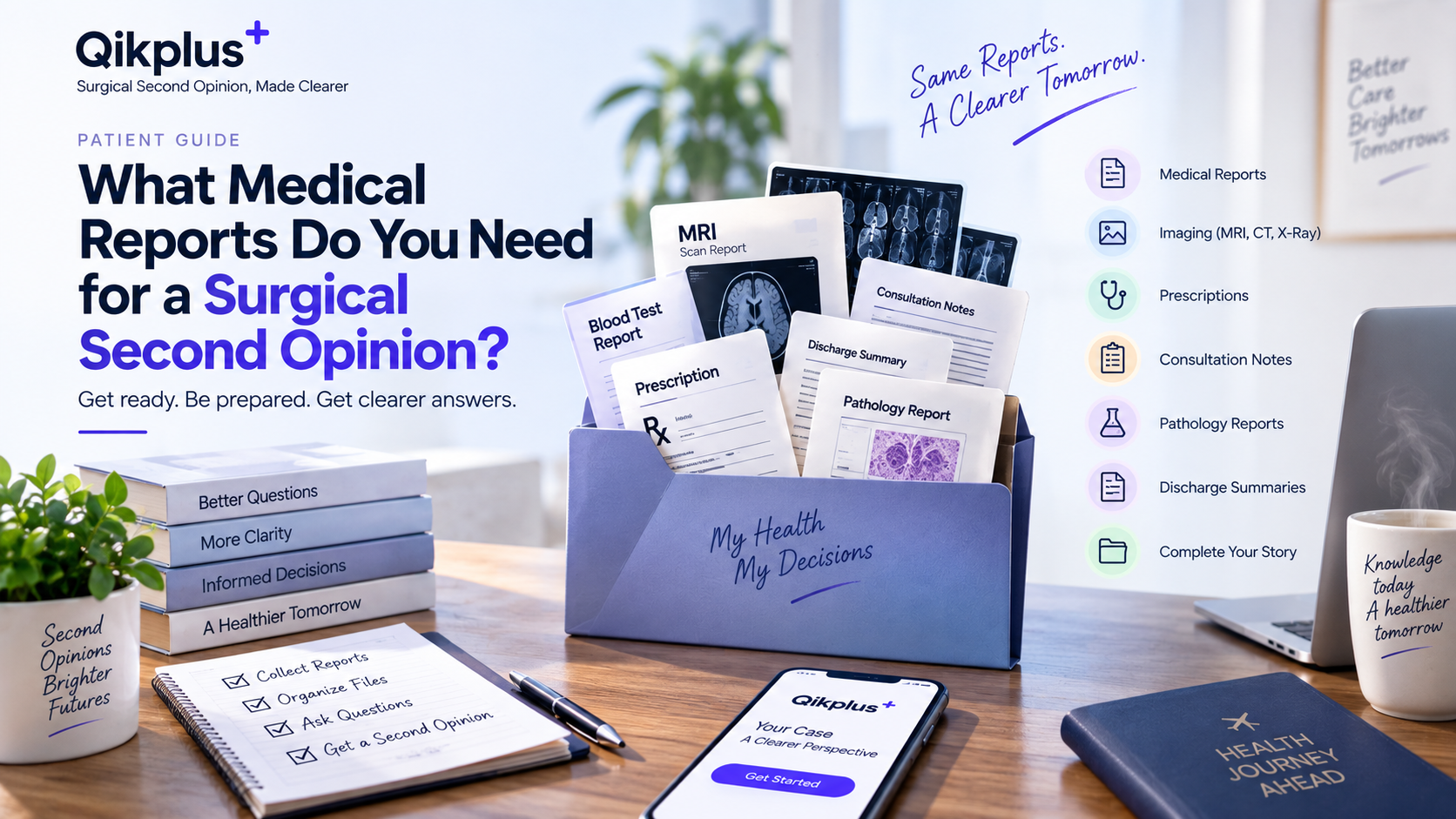
If a doctor has recommended surgery, getting a second opinion can help you better understand your diagnosis, treatment options and the reasons behind the proposed procedure. But one question often comes up: What documents do I need for a surgical second opinion? A specialist reviewing your case needs enough information to understand your medical history, diagnosis, investigations and proposed treatment. Depending on your condition, this may include medical reports, imaging, prescriptions, previous consultation notes, discharge summaries and pathology reports. Having these documents organized before your consultation can make the review more useful and help you discuss the important questions with the specialist. What Is a Surgical Second Opinion? A surgical second opinion is an additional medical assessment from another qualified specialist after you have received a diagnosis or treatment recommendation. It may be useful when: • Surgery has been recommended
• You want another specialist's perspective
• You are considering a major procedure
• You have questions about your diagnosis
• More than one treatment option may be available
• You want to understand the potential benefits and risks
• You are unsure whether surgery is the appropriate next step
A second opinion may confirm the existing diagnosis or treatment plan, or provide another perspective that you can discuss with your treating doctor. What Documents Should You Prepare? There is no single set of reports required for every surgical second opinion. The documents needed depend on your condition, specialty, diagnosis and proposed procedure. However, the following records are commonly useful. 1. Your Latest Medical Reports Start with the most recent reports related to your condition. These may include: • Blood test reports
• Urine tests
• Hormone tests
• Liver or kidney function tests
• Cardiac investigations
• Infection-related tests
• Other laboratory investigations
If multiple tests have been performed over time, keeping older reports can also help the specialist understand how your condition has changed. 2. MRI, CT Scan and X-Ray Reports Imaging can be particularly important when seeking a second opinion for surgical conditions. Depending on your condition, you may have: • MRI
• CT scan
• X-ray
• Ultrasound
• PET scan
• Mammogram
• Doppler study
• Other diagnostic imaging
Don't keep only the written report. If available, keep the actual imaging files or digital scans as well. For example, an MRI may have: MRI report + MRI images Both can provide useful information to the specialist. The same applies to CT scans and other imaging studies. 3. Previous Doctor Consultation Notes If you have already consulted one or more doctors, keep the relevant consultation documents. These may contain: • Diagnosis
• Symptoms
• Clinical findings
• Recommended treatment
• Proposed surgery
• Previous treatment
• Follow-up recommendations
This gives the second-opinion specialist context about how your case has been evaluated so far. 4. Prescriptions and Medication History Include your recent prescriptions and, where relevant, information about medicines you are currently taking. This may include: • Prescription medicines
• Pain medicines
• Antibiotics
• Blood thinners
• Diabetes medicines
• Blood pressure medicines
• Supplements
• Other ongoing medications
Your surgical team needs accurate information about medicines and supplements because medication management can be an important part of preparing for surgery. Do not stop or change any medication simply because you are seeking a second opinion. Follow instructions from your treating healthcare team unless a qualified clinician advises otherwise. 5. Biopsy or Pathology Reports If your condition involves a biopsy, tumor, cancer evaluation or another pathology investigation, include: • Biopsy report
• Histopathology report
• Cytology report
• Immunohistochemistry reports, if applicable
• Relevant pathology slides or digital pathology information, if available
For some conditions, pathology information can be an important part of understanding the diagnosis and treatment options. 6. Hospital Discharge Summaries If you have previously been admitted to a hospital, include your discharge summary. It may contain information about: • Diagnosis
• Procedures performed
• Medicines prescribed
• Investigations
• Hospital course
• Follow-up recommendations
This can be particularly useful if you have already undergone treatment or a previous procedure. 7. Previous Surgery Records If you've had surgery in the past, provide relevant records when available. These may include: • Previous operation notes
• Surgical reports
• Discharge summaries
• Implant details
• Pathology reports
• Follow-up records
Previous surgical history can be relevant when a specialist is evaluating your current treatment options. 8. Your Medical History Reports alone may not tell the complete story. Prepare a short summary containing: Your symptoms • What symptoms do you have?
• When did they start?
• Have they become better or worse?
• How frequently do they occur?
Your medical history Include relevant conditions such as: • Diabetes
• High blood pressure
• Heart conditions
• Kidney disease
• Previous surgeries
• Allergies
• Other significant medical conditions
Your current treatment Mention: • Medicines
• Previous treatments
• Physiotherapy
• Injections
• Other procedures
• Whether previous treatment helped
9. The Recommended Surgery If surgery has already been recommended, write down the exact procedure if you know it. For example: • Total knee replacement
• Hip replacement
• Spinal decompression
• Spinal fusion
• Hernia repair
• CABG
• Gallbladder surgery
• Kidney stone procedure
• Tumor surgery
Also note: Why was the surgery recommended? If your doctor explained the reason, write it down. This gives the second-opinion specialist a clearer starting point. 10. Questions You Want the Specialist to Answer Don't only send reports. Prepare questions. For example: About the diagnosis • What exactly is my diagnosis?
• How serious is the condition?
• Do my reports support the diagnosis?
About surgery • Is surgery necessary in my situation?
• Why is surgery being recommended?
• Are there non-surgical alternatives?
• What are the potential risks and benefits?
About timing • Does this require immediate treatment?
• Is it reasonable to wait?
• What could happen if treatment is delayed?
About recovery • What should I expect after surgery?
• How long could recovery take?
• Will physiotherapy be required?
These are consistent with questions recommended by major healthcare organizations for patients considering surgery. Surgical Second Opinion Checklist Before submitting your case, use this checklist:DocumentReady?Latest medical reports☐Previous medical reports☐MRI / CT / X-ray reports☐Imaging files, if available☐Blood test reports☐Prescriptions☐Previous consultation notes☐Hospital discharge summaries☐Biopsy / pathology reports☐Previous surgery records☐Current medication list☐Relevant medical history☐Recommended surgery details☐Questions for the specialist☐ What If I Don't Have All My Reports? Don't assume you cannot seek another opinion simply because one document is missing. Start with the records you have and tell the specialist what information is unavailable. If a particular report or scan is important to the assessment, the healthcare professional can tell you whether additional information is needed. For a second opinion, organized and relevant information is more useful than simply uploading every medical document you have. How Should You Organize Your Medical Reports? A simple structure can make your records easier to understand. Suggested order 01 — Patient information Basic details and relevant medical history. 02 — Current symptoms What you're experiencing and when it started. 03 — Diagnosis Current diagnosis and doctor's assessment. 04 — Investigations Blood tests, MRI, CT, X-ray, ultrasound and other reports. 05 — Treatment history Medicines, physiotherapy, injections and previous procedures. 06 — Surgical recommendation Recommended procedure and reason given. 07 — Questions What you want the second-opinion specialist to clarify. This gives the reviewing specialist a clearer picture of your case. Can You Get a Surgical Second Opinion Online? In some situations, yes. Virtual second-opinion services can allow medical records and imaging to be reviewed remotely, depending on the condition and the service provided. Major healthcare systems, including Cleveland Clinic, offer virtual second-opinion pathways where patients submit medical information for specialist review. However, an online medical-record review may not be appropriate for every situation. Some conditions require a physical examination, urgent evaluation or additional investigations. How Qikplus Helps Organize Your Medical Information Preparing medical information for a specialist can be difficult when your records are spread across: • Hospital visits
• Diagnostic centres
• Prescriptions
• Email attachments
• WhatsApp documents
• Old medical files
• Imaging reports
Qikplus is designed to help patients organize their medical information into a structured Caselet before specialist review. You can upload relevant medical information and use the Caselet to create a clearer representation of your case. The goal is simple: Your reports → Organized medical information → Caselet → Specialist review Qikplus uses AI to help organize available information, while clinical assessment and medical decisions remain with qualified healthcare professionals. What Should You Not Do? Don't upload unrelated documents simply to make your case look complete. Focus on information relevant to your current medical problem. Don't remove important medical history. A condition that seems unrelated may still be relevant to your healthcare team. Don't alter medical reports. Always provide the original information where possible. Don't stop medication based on online information. Medication changes should be discussed with your treating healthcare professional. Don't delay emergency care for a second opinion. If you have severe or rapidly worsening symptoms or have been told you need urgent treatment, seek appropriate medical care immediately. When Should You Consider a Surgical Second Opinion? A second opinion may be worth discussing with your healthcare team when: • You have been advised to undergo major surgery
• You want to understand your treatment options
• You have questions about the proposed procedure
• You have a complex or serious condition
• You have received differing medical opinions
• You want another specialist to review your reports
• You are considering an elective procedure
A second opinion is not necessarily about proving that the first recommendation is wrong. It can also provide confirmation or additional clarity. Frequently Asked Questions What documents are needed for a surgical second opinion? Commonly useful documents include medical reports, imaging reports and scans, prescriptions, consultation notes, discharge summaries, pathology reports and relevant medical history. The exact requirements depend on the condition. Do I need MRI or CT scans for a second opinion? If your condition was evaluated using MRI, CT or another imaging test, providing the relevant report and available images can help the reviewing specialist assess your case. Can I get a second opinion without all my medical reports? You can begin with the records you have, but additional information may be needed depending on the condition and specialist's assessment. Should I include old medical reports? Relevant older reports can be useful because they may show how your condition has changed over time. Can I get a second opinion before surgery? Yes. A second opinion can be considered before a major treatment decision such as surgery. Can Qikplus diagnose my condition? No. Qikplus should not be presented as a replacement for a qualified clinician's diagnosis or clinical examination. Its Caselet is intended to help organize medical information for specialist review. Final Takeaway A surgical second opinion is only as useful as the information available to the reviewing specialist. Before your consultation, try to organize: Medical reports + imaging + prescriptions + medical history + treatment history + your questions. You don't need to become an expert in your medical condition. You need to make sure the relevant information is available so the appropriate healthcare professional can review it and discuss your options with you. Need help organizing your medical information? Create your Qikplus Caselet and prepare your case for specialist review.